Discover how to choose the best Maldives hotels and islands for your trip, from North and South Malé Atoll to Baa and South Ari, with resort examples, villa tips and transfer advice.
Choosing the right Maldives island for your stay
Landing at Malé International Airport, you do not choose a hotel first. You choose an island, an atoll, and a way of travelling. That decision shapes everything that follows, from how long you spend in a seaplane to whether you hear only waves at night or the distant hum of local life.
Resorts in the Maldives are usually set on their own private island, each within a specific atoll – ring-shaped coral formations that define the geography here. North Malé Atoll and South Malé Atoll offer the quickest access from the airport by speedboat, with islands close enough that you can be in your villa pool less than an hour after landing. For example, Gili Lankanfushi and Baros Maldives are around 20–25 minutes by boat, while OZEN LIFE Maadhoo in South Malé is typically 35–40 minutes. Further out, in Ari Atoll, Noonu Atoll or Baa Atoll, you trade that convenience for quieter lagoons, deeper channels for diving and a stronger sense of remoteness.
For a first visit, staying in North Malé or South Malé often makes sense if you want to minimise transfers and maximise time on the water. Repeat visitors, or those who care more about marine life than skyline views of Malé, tend to book in outer atolls such as South Ari or Baa, where whale sharks, manta cleaning stations and long sandbanks become part of daily life. In Baa Atoll, for instance, Finolhu and Amilla Maldives combine strong house reefs with easy access to Hanifaru Bay during manta season. There is no single best resort area; there is only the island that matches your rhythm.
Overwater villas vs beach villas vs private islands
Stepping onto a wooden jetty that stretches over turquoise water feels like the Maldives cliché for a reason. Overwater villas deliver that drama instantly, with direct ladder access to the lagoon and sunrise or sunset views that frame the horizon like a private cinema. They suit couples who plan to spend long, quiet hours in or around their private pool, watching reef fish drift under the deck. At resorts such as Conrad Maldives Rangali Island in South Ari or Six Senses Laamu in Laamu Atoll, entry-level overwater categories often start around mid to high four figures per week in the dry season, with premium pool villas priced higher.
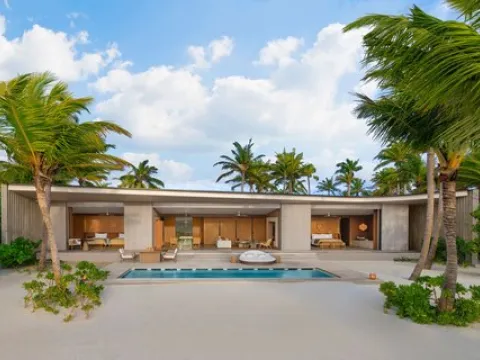
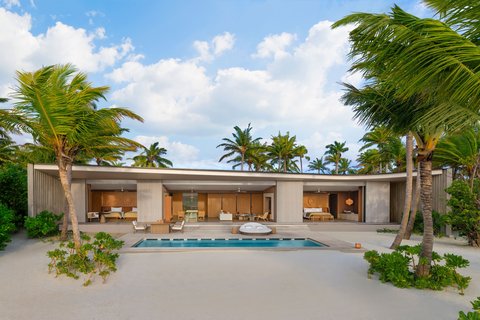
Beach villas tell a different story. You wake to the sound of palms, not waves under stilts, and walk a few metres across soft sand to a pool beach strip where the lagoon is usually calmer and more swimmable. Families often prefer these villas for the extra outdoor space, shaded gardens and easier access to shared facilities. At Soneva Fushi in Baa Atoll or LUX* South Ari Atoll, many beach residences include separate bedrooms, private pools and direct access to wide, shallow lagoons. If you plan to explore the island on foot, rather than stay suspended above the water, a beach category often feels more grounded and relaxed.
At the very top of the scale sit private island experiences, where a single group or a handful of guests occupy an entire island or a secluded wing. These are designed for travellers who value discretion over spectacle – multigenerational trips, small celebrations, or those who want the full “no neighbours” feeling. Options range from the exclusive-use Cheval Blanc Randheli Private Island in Noonu Atoll to standalone retreats like Four Seasons Private Island at Voavah in Baa. The trade-off is simple: you gain total privacy and tailored service, but you lose the casual buzz of shared restaurants, bars and communal activities that define many of the best resorts.
Understanding the main atolls: north, south and beyond
Speeding out of Malé harbour, you quickly understand why location matters. Islands in North Malé Atoll sit relatively close together, with views that might include other resorts, local islands and the faint outline of the capital. This area works well if you want short transfers, varied excursions and a sense of being connected to the broader Maldivian world. Well-known luxury options here include One&Only Reethi Rah, Patina Maldives and W Maldives, each with its own take on design and atmosphere.
South Malé Atoll feels more spaced out, with channels that can bring slightly stronger currents and, in turn, livelier snorkelling. Travellers who enjoy a mix of spa time, gentle exploration and the occasional drift snorkel often gravitate here. Resorts such as OZEN LIFE Maadhoo and Anantara Dhigu are frequently highlighted among the best family resorts in South Malé Atoll for their shallow lagoons and kids’ facilities. Further south again, South Ari Atoll is known among divers for its whale shark encounters and long outer reefs; if your idea of luxury is a day spent on a dhoni boat scanning the horizon, this is where to look, with properties like LUX* South Ari Atoll and Constance Moofushi offering regular marine excursions.
To the north, Noonu Atoll and Baa Atoll offer a different mood. Baa, a UNESCO Biosphere Reserve, is where marine conservation and resort life intersect most visibly, with seasonal manta gatherings in certain lagoons. Here you will find Soneva Fushi, Amilla Maldives and Finolhu, all popular with travellers who prioritise snorkelling and sustainability. Noonu feels more remote, with fewer islands and a stronger sense of open ocean, home to ultra-luxury addresses such as Cheval Blanc Randheli. In the central region, the Fari Islands development in the north Malé area has introduced a new cluster concept, where several luxury resorts share a social hub, a marina and art-filled public spaces – ideal if you like variety without long transfers.
Design, atmosphere and service: how to read a Maldives resort
Walking along a sandy path under breadfruit trees, you can tell within minutes whether an island leans barefoot and natural or polished and architectural. Some resorts embrace a castaway aesthetic with thatched roofs, open-air bathrooms and bicycles left casually outside villas. Soneva Fushi and Gili Lankanfushi are classic examples of this “no news, no shoes” style. Others opt for clean lines, sculptural pools and a more urban sense of space, especially in newer developments such as those around the Fari Islands, where Patina Maldives and Ritz-Carlton Maldives, Fari Islands showcase contemporary design.
Service style varies just as much. On certain islands, you will be assigned a dedicated host who quietly arranges everything from snorkel trips to late spa appointments, often communicating via a simple in-villa phone or note system. Resorts like One&Only Reethi Rah and Cheval Blanc Randheli are known for this high-touch butler approach. Elsewhere, the atmosphere is more informal: you stroll to the main bar, chat with the team and build your days around a looser schedule. Decide which rhythm suits you before you book, because it shapes how “looked after” you feel.
Wellness and dining also reveal a resort’s priorities. If a property invests in a serious spa with multiple treatment pavilions, hydrotherapy pools and visiting practitioners, it usually signals a focus on longer stays and repeat guests. A strong house reef, a resident marine biologist and thoughtfully guided snorkel trips indicate that the island takes its lagoon seriously. When comparing options, look beyond the headline of overwater villas and ask how the resort invites you to explore its reef, sandbanks and surrounding islands. On many booking pages you can also find island maps, sample restaurant menus and spa brochures that help you match the resort’s facilities to your own travel style.
Practicalities: transfers, seasons and what to expect on the ground
From the runway at Velana International Airport to your villa door, the journey can be as short as 20 minutes by speedboat or as long as a 45-minute seaplane flight across multiple atolls. Resorts in North Malé Atoll and some parts of South Malé Atoll usually rely on boats, which means more flexible arrival times and less waiting. Islands in Ari Atoll, Noonu Atoll or Baa Atoll typically require seaplanes, which are scenic but operate only in daylight and can involve a short stop at a floating platform before you reach your final island. Typical seaplane transfer times to Baa Atoll range from about 30 to 40 minutes, while South Ari and Noonu can take closer to 35–45 minutes depending on routing.
The best time to visit the Maldives generally runs from November to April, when seas are calmer and skies clearer. During these months, private pool decks and pool beach areas are used from early morning to late evening, and visibility for snorkelling is often excellent. The rest of the year brings more changeable weather, with passing showers and occasional rougher seas, but also a softer light, fewer boats on the horizon and, in some regions, richer plankton blooms that attract marine life. Divers often time trips to Baa Atoll between June and October for manta rays, while South Ari’s whale sharks can be seen year-round with seasonal variations.
On the island itself, expect a self-contained world. Most luxury resorts offer several restaurants, a spa, water sports, diving, and often a kids’ club, all woven around the natural shape of the island. You move mostly on foot or by buggy along sandy paths, sometimes passing a small jetty where boats depart for nearby sandbanks or local islands. The atmosphere is unhurried; days are structured less by the clock and more by the angle of the sun on your terrace. Many travellers find that five to seven nights is the sweet spot for settling into this slower rhythm without feeling they have stayed too long in one place.
Who each area suits best – and how to choose
Couples planning a first trip often do best in an easily reached atoll with a strong mix of overwater villas and beach options. North Malé Atoll and the newer cluster around the Fari Islands work well here, especially if you value design, dining variety and the ability to explore neighbouring islands by short boat rides. For a romantic stay close to Malé, consider overwater villas at Baros Maldives or Gili Lankanfushi; for a more contemporary feel, look at Patina Maldives or Ritz-Carlton Maldives, Fari Islands. If you are drawn to architecture, curated art and a social marina scene, the Malé–Fari corridor is a natural fit.
Families usually benefit from islands with generous beaches, shallow lagoons and a clear separation between quieter and livelier zones. Parts of South Malé Atoll and some larger islands in Ari Atoll offer this balance, with long arcs of sand, shaded gardens and villas that combine a private pool with easy access to shared facilities. Anantara Dhigu, OZEN LIFE Maadhoo and LUX* South Ari Atoll are frequently mentioned among the best family resorts in South Malé Atoll and South Ari for their kids’ clubs and multi-bedroom villas. Look for kids’ clubs close to the main pool, short buggy rides between key areas and a choice of casual dining spots.
Divers and ocean-focused travellers should look more closely at South Ari, Baa Atoll and certain channels in Noonu Atoll, where deeper waters and cleaning stations attract larger marine species. Here, the luxury is not only in the villa but in the daily access to reefs, channels and sandbanks that feel far from the city lights of Malé. Resorts such as Constance Moofushi, LUX* South Ari Atoll, Amilla Maldives and Six Senses Laamu are often recommended for strong house reefs and well-run dive centres. If you dream of days structured around tide charts rather than spa schedules, these outer atolls will feel more aligned with your priorities.
How to book a Maldives hotel with confidence
Choosing a hotel in the Maldives islands is less about chasing the most famous name and more about matching your expectations to the island’s reality. Start with three filters: atoll, villa type and atmosphere. Decide whether you want the quick access of a Malé-area resort or the remoteness of an outer atoll, whether you picture yourself in an overwater villa or on a shaded beach, and whether you prefer a quiet, almost private island feel or a livelier social scene.
Once those pillars are clear, look closely at the details that will define your stay. Study the island map to see where different villa categories sit in relation to the sunrise, sunset, prevailing winds and main facilities. Check whether the spa, main pool and key restaurants are clustered together or spread out, and how that aligns with your daily habits. If you value privacy, favour villas at the ends of jetties or on less-trafficked stretches of beach rather than central locations near the arrival jetty. For a first benchmark, compare entry-level villa prices in your travel month across two or three shortlisted resorts in the same atoll to understand how far your budget will stretch.
Finally, consider how you want to explore beyond your villa. Some islands focus on curated experiences such as sandbank picnics, night snorkelling or visits to nearby local islands, while others lean into wellness, with extensive spa menus and yoga pavilions over the water. There is no universal “best” resort in the Maldives; there is only the island whose geography, design and service philosophy quietly mirror the way you like to travel. Reading recent guest reviews, studying resort maps and, if needed, speaking with a specialist travel advisor can help you book with confidence.
FAQ
What is the best time of year to visit the Maldives islands?
The most reliable weather in the Maldives typically runs from November to April, when conditions are drier and seas are calmer. During this period, you can expect long days by your private pool or on the beach, clearer visibility for snorkelling and smoother boat or seaplane transfers between Malé and the outer atolls. The rest of the year can still be rewarding, but you should be prepared for passing showers, occasional wind and a more changeable sea state. Divers and snorkellers often plan trips around specific seasons in Baa Atoll or South Ari to coincide with manta ray and whale shark activity.
Which atoll should I choose for my first Maldives trip?
For a first visit, North Malé Atoll and South Malé Atoll are often the most practical choices because they are reachable by speedboat from the airport, reducing transfer time and complexity. These areas offer a wide range of resorts, from intimate islands to larger properties with extensive facilities, and make it easy to balance relaxation with short excursions. If you are comfortable with a seaplane transfer and want a stronger focus on marine life, South Ari or Baa Atoll are excellent alternatives, with popular options such as LUX* South Ari Atoll, Constance Moofushi and Soneva Fushi frequently appearing on lists of the best Maldives hotels for snorkelling and diving.
Are there family-friendly luxury resorts in the Maldives?
Many luxury resorts in the Maldives are designed with families in mind, especially on larger islands with broad beaches and shallow lagoons. Look for properties that offer spacious beach villas, kids’ clubs, flexible dining and activities such as snorkelling lessons or gentle water sports. Islands in South Malé Atoll and Ari Atoll often provide this mix, allowing parents to enjoy the spa or a quiet pool while children are engaged in supervised activities. Resorts like Anantara Dhigu, OZEN LIFE Maadhoo and LUX* South Ari Atoll are frequently recommended for multi-generational stays.
How long should I stay on a Maldives island resort?
A stay of five to seven nights usually allows enough time to settle into the island rhythm, explore the lagoon and enjoy both spa time and excursions without feeling rushed. Shorter stays of three or four nights can work if you choose a resort close to Malé in North Malé or South Malé Atoll, minimising transfer time. For more remote atolls such as Noonu or Baa, a longer stay makes the seaplane journey more worthwhile and gives you space to experience the full range of activities, from reef snorkels and sunset cruises to longer diving days.
Do I need to visit more than one island during my trip?
Most travellers choose a single resort island and stay there for the entire trip, as each island functions as a complete destination with its own beaches, pools, spa and dining. Island-hopping is possible, especially between resorts in the Malé area or within the same atoll, but it adds extra transfers and can break the sense of calm that many people seek in the Maldives. If you are curious about variety, consider an island that offers diverse villa types, multiple restaurants and a good mix of activities instead of splitting a short stay across several resorts. Alternatively, you can choose a cluster such as the Fari Islands, where you can experience different dining and social scenes while staying within a single integrated destination.