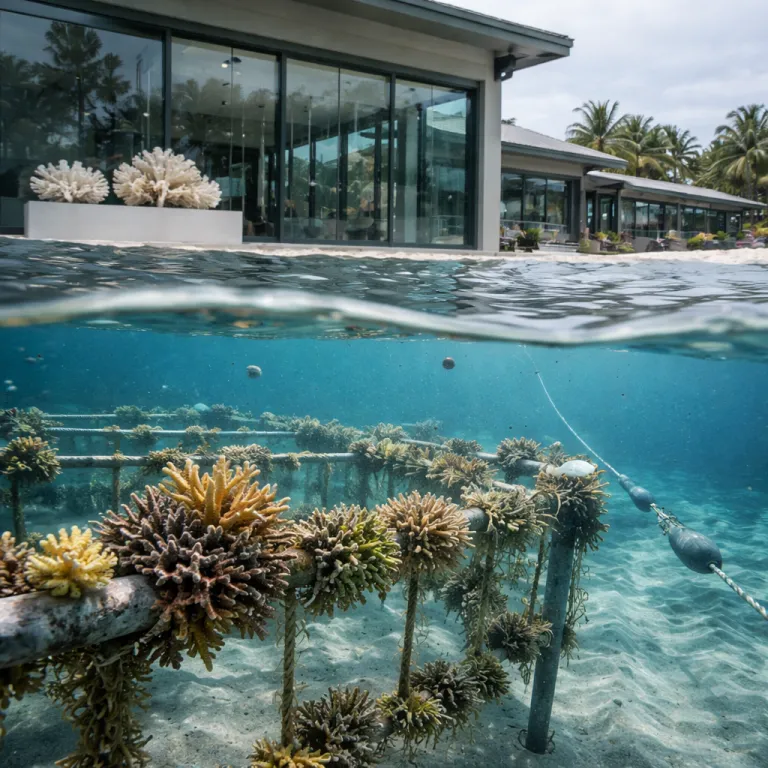
Why maldives resort coral restoration now defines true luxury
On a high end island in the Maldives, the real luxury sits beneath the waterline. A serious Maldives resort coral restoration program now signals whether a property understands that its coral reef is not décor but infrastructure, as critical as the desalination plant or the runway. Families choosing a resort in the Maldives should read coral restoration projects with the same scrutiny they give kids’ clubs or villa layouts.
The context is stark yet practical for travelers who care about reefs and results. Coral reefs across the Maldives have absorbed repeated heat stress, and every credible reef restoration project now talks about long term resilience rather than quick, photo friendly coral fragments tied to pretty frames. When you book, you are not just buying a villa at a resort; you are buying into a restoration program that will either support coral colonies and marine life or quietly stage a marketing backdrop.
Several properties already treat Maldives coral as a living asset rather than a brochure image. Sun Siyam Iru Fushi runs a coral restoration project led by marine biologist Mohamed Shah, while Alila Kothaifaru Maldives folds coral propagation into a broader sustainability strategy that includes waste reduction. Sheraton Maldives Full Moon Resort & Spa, working with Reefscapers, has supported large networks of coral frames and reef stars, showing how damaged reefs can be rebuilt when a resort, a marine biologist and a local partner align around a long term reef restoration plan.
The five minute family audit of any coral nursery
Walk your children down the jetty and treat the coral nursery like a lab visit. A functioning Maldives resort coral restoration program will show its workings in plain sight, while a cosmetic project hides behind vague signage and unlabelled frames. You only need five minutes over the water to read the difference and decide whether the coral reef work is real.
Start with the coral frames or reef stars sitting under the nursery platform or along the house reef. On a serious restoration project, each metal frame, reef star or other structure carries clear tags with dates, coral fragment codes and sometimes depth notes, because coral propagation without data is just gardening. If you see many dead corals still wired to coral frames or reef stars for months, with no sign of cleaning or replacement, that reef restoration effort is probably staged rather than adaptive.
Next, look for a logbook or digital dashboard near the nursery explaining how many coral fragments have been planted, which coral species are used and what survival rates look like after heat events. Resorts such as W Maldives, working with Mars Sustainable Solutions on the Mars Reef star system, have published fragment numbers and survival data; for example, a 2022 public update on the Mars reef star program in the Maldives reported survival rates above 70% for several thousand fragments after a bleaching season. When a resort is proud to show how its coral reefs respond over the long term, including losses during bleaching, you are looking at a restoration program rather than a one off marketing project.
How to read the marine biologist, partners and the fine print
The next filter for any Maldives resort coral restoration effort is the human one. A full time marine biologist living on the island, diving the coral reef daily and meeting guests is a different proposition from a consultant who visits once a month. When you see “partnership with” language on a website, ask whether that means a permanent on site presence or occasional training sessions.
Names matter because they signal depth of expertise and long term commitment to coral reefs. Reefscapers, for example, has worked alongside local teams at Sheraton Maldives to rescue and transplant corals onto metal frames, while Mars Sustainable Solutions has refined the Mars Reef star system now used at W Maldives and other islands. When a resort mentions modular systems for coral propagation or collaborations with institutions such as the Australian Institute of Marine Science or the Maldives Marine Research Institute, you are looking at a restoration project that plugs into global science rather than operating in isolation.
Equally, pay attention to how a resort talks about its restoration program in relation to local communities. Properties like The St. Regis Maldives Vommuli Resort, often referred to as St. Regis Maldives Vommuli, highlight how their coral frames around Vommuli Island are maintained alongside local staff and visiting scientists. When a Maldives Vommuli style property invests in training its own team of marine guides, rather than outsourcing everything, the coral restoration work tends to be more resilient and better integrated into daily resort operations.
Family friendly coral restoration: kids’ programs, heat waves and honest data
For a premium family, the real test of a Maldives resort coral restoration initiative is how it treats your children’s curiosity. At a serious resort, the kids’ club does not just offer coral painting; it walks young guests to the nursery, lets them help attach coral fragments and then brings them back months later to see which corals survived. That shift from entertainment to monitoring turns a holiday activity into an early lesson in marine science and long term reef care.
Look at how properties frame their children’s programs around coral propagation and reef restoration. At Four Seasons Landaa Giraavaru, the Marine Discovery Centre runs structured sessions where children help with coral fragment cleaning, coral frame maintenance and coral reef fish identification, guided by a resident marine biologist who explains why some corals bleach and others resist. Crossroads Maldives, with its Marine Discovery Centre, also uses reef restoration projects to anchor family education, turning the marina area into a living classroom about Maldives coral and local reef fish.
The harder question is how these programs behave when the water warms and bleaching hits the coral reef. A credible restoration project will temporarily pause guest planting, move coral colonies to deeper or cooler sites using depth adjustable frames and communicate openly about losses and lessons. As marine biologist Mohamed Shah notes, “A transparent restoration program shares its failures as well as its successes, because that is how reefs and people learn together.” Biosphere Expeditions has been working in the Maldives since 2011, and its citizen science weeks publish annual reports on reef health and survey methods, offering a useful benchmark for rigor if one family member wants to go beyond nursery snorkelling and join structured reef surveys during a stay.
Choosing your island: from Vommuli to local atolls with real reef work
Once you know how to read a Maldives resort coral restoration program, the map of the Maldives looks different. You start to see clusters of expertise around certain atolls, where resorts, local communities and marine partners share data and sometimes even coral fragments. For a family, this means you can choose an island where the reef is both beautiful and meaningfully protected by an active restoration project.
The St. Regis Maldives Vommuli Resort, often shortened to Vommuli Resort or St. Regis Maldives, has ringed its island with extensive coral frames that form a living laboratory for guests. Nearby, properties like Sun Siyam Iru Fushi and Finolhu have transplanted thousands of coral colonies as part of collaborative reef restoration projects that use both traditional coral fragments and newer systems such as Mars Reef stars. When you snorkel these sites with the resident marine biologist, you see coral propagation in action rather than static underwater sculptures.
Not every meaningful experience requires a private island price tag, and some travelers now pair a high end stay with time on a more local style island. A property such as Palm Garden Thoddoo, profiled in depth in 2023 as a serene island stay with authentic Maldivian charm and easy access to nearby coral reefs, can anchor a few nights focused on culture and snorkelling, while your main resort stay delivers the full restoration program and kids’ activities. Across both, the same rules apply: ask about the restoration project, look for data on coral frames and reef stars, and choose places where Maldives coral is treated as a shared, long term responsibility alongside local communities.
Practical checklist: what to ask before you book a coral focused stay
Before you lock in flights and seaplane transfers, send one concise email to your shortlisted resorts. Ask for the latest figures on their Maldives resort coral restoration work, including how many coral frames or reef stars are currently active, which coral species they use and what survival rates they have recorded after recent heat events. The tone of the reply will tell you almost as much as the numbers.
Request to meet the resident marine biologist during your stay and ask whether they run regular guided snorkels on the house reef and the coral nursery. A resort that values its restoration program will happily schedule family friendly sessions where you can help clean coral frames, observe coral colonies up close and understand how the restoration project fits into wider reef restoration efforts across the Maldives. If the answer leans on generic “environmental activities” without naming specific coral propagation methods or partners such as Reefscapers, Mars Sustainable Solutions or local NGOs, adjust your expectations.
Finally, think about how your family will engage with the coral reef beyond the resort boundary. Some guests now combine a week at a high end property such as St. Regis Maldives Vommuli with a citizen science slot on a Biosphere Expeditions trip, using published expedition summaries to understand how reefs are changing across multiple atolls. Others choose islands where restoration work happens alongside local communities, so children see that coral reefs are part of everyday life, not just a holiday backdrop, and that long term care for these ecosystems is a shared project rather than a one time activity.
FAQ
Which Maldives resorts are genuinely involved in coral restoration ?
Resorts like Sun Siyam Iru Fushi, The St. Regis Maldives Vommuli Resort, Sheraton Maldives Full Moon Resort & Spa, Alila Kothaifaru Maldives, W Maldives, Finolhu and Four Seasons Landaa Giraavaru run active coral restoration projects with coral frames, reef stars or nurseries. Many of these properties work with partners such as Reefscapers or Mars Sustainable Solutions to design and monitor their coral propagation methods. When comparing options, ask each resort for current data on coral fragments planted, coral colonies supported and survival rates after recent bleaching events, and request the date of the latest monitoring report so you can judge how up to date the information is.
How can my family participate in coral restoration during our stay ?
Most resorts with a serious Maldives resort coral restoration program offer guided activities where guests help attach coral fragments to frames, clean algae from coral reefs or monitor growth with a marine biologist. Families can usually join snorkelling tours over the coral nursery, attend short workshops on coral reef ecology and sometimes adopt a coral frame that the resort will photograph over time. Always check age limits and safety guidelines, as some tasks around the coral reef are better suited to older children and confident swimmers.
What methods are used to restore coral reefs in the Maldives ?
Common techniques include transplanting small coral fragments from healthy coral colonies onto metal coral frames or reef stars, suspending corals in floating nurseries and using depth adjustable structures to move sensitive corals during heat waves. Programs such as the Mars Reef star system at W Maldives or the large scale frame networks at Sheraton Maldives and St. Regis Maldives Vommuli show how these tools can help rebuild damaged reefs. Newer modular technologies also help extend reef restoration work to more remote islands with limited infrastructure.
How do I know if a coral nursery is well maintained ?
A healthy nursery shows clean frames or reef stars with mostly living coral fragments, clear date tags and minimal algae or sediment covering the structures. You should see dead corals removed promptly, new fragments added in a structured way and a visible logbook or information board explaining the restoration project. If the nursery looks neglected, with many dead corals left in place and no staff able to explain the restoration program, the project is likely more decorative than scientific.
Can we support coral restoration without staying at a luxury resort ?
Yes, travelers can support Maldives coral restoration by choosing locally owned guesthouses that partner with conservation groups, joining citizen science trips such as Biosphere Expeditions or donating directly to organizations that work on reefs across the Maldives. Some non luxury properties collaborate with nearby resorts or NGOs to offer guided visits to coral nurseries and reef restoration sites. Whatever your budget, asking informed questions about coral reefs and restoration projects encourages better practices across the industry.