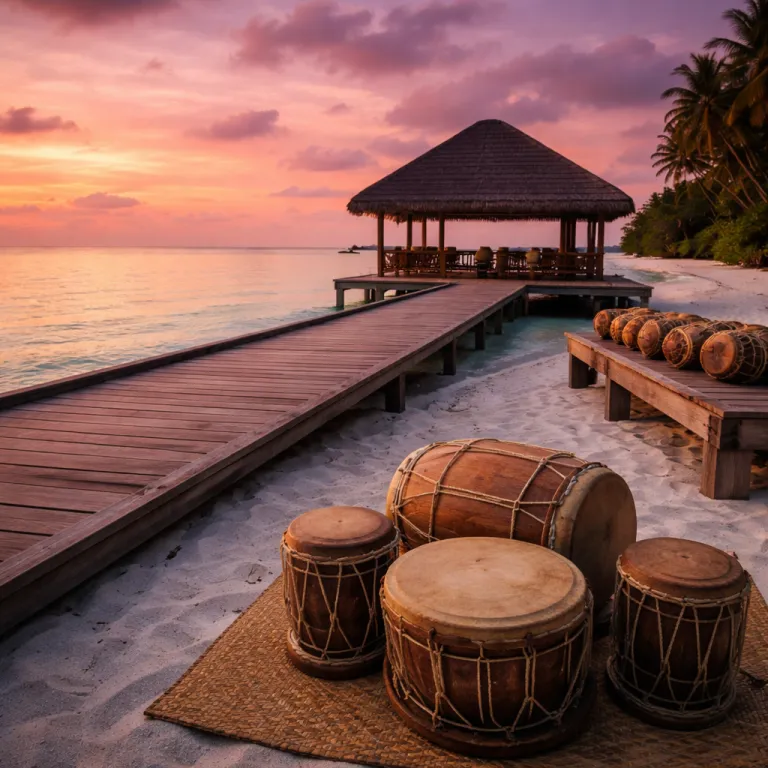
Bodu beru Maldives culture: how to go beyond the welcome drink
Bodu beru Maldives culture beyond the welcome drink
The phrase bodu beru translates as big drum in Dhivehi and it sits at the heart of bodu beru Maldives culture. In the Maldives this music, with its East African roots and Maldivian soul, has travelled from village sand circles to resort decks without losing its pulse when handled with care. For a luxury traveller, the difference between a staged lobby show and a true boduberu experience will define how close you get to real Maldivian culture.
At its core bodu beru is a traditional Maldivian music and dance performance featuring drumming, singing, and dancing. Cultural researchers and Maldivian heritage organisations such as the National Centre for the Arts describe it as a communal performance where big drums, call-and-response vocals and improvised dance come together in a single, escalating rhythm. Ethnomusicology studies on the Maldives and Indian Ocean trade routes, including work cited by the Maldives Heritage Survey and UNESCO dossiers on intangible heritage in the region, note how the drums, the dancers and the stories fold Africa, South Asia and Arabia into one island performance that has evolved over centuries of Indian Ocean contact.
A typical island boduberu group gathers around 15 to 20 performers, with three or more lead drummers working big drums carved from coconut wood and stretched with goatskin drum heads, a configuration documented in field recordings by Maldivian music scholars and local cultural NGOs. The rhythm drums start slow, the patterns almost meditative, then the tempo rises until dancers mimic fishing, sailing and shore work in a whirl of movement that feels like ancient art made urgent. When you feel the low drumbeats in your chest, hear the layered harmonies and see Maldivian pride in the faces of the dancers, you understand why this culture still anchors community nights on many local islands.
Reading the room: lobby sets versus island boduberu nights
Most high end resorts in the Maldives schedule bodu beru as a 20 minute welcome or farewell, often in the lobby or by the main pool. You will see perhaps six to eight staff members with two drums, a few bamboo sticks and a polite, contained dance that flatters the sunset more than it channels the full emotional power of the tradition. These short performances are not fake, but they are edited for a quick resort experience and rarely show the deeper layers of bodu beru Maldives culture.
A true island boduberu night feels different the moment you step onto the sand. There are usually 15 or more performers, several big drums in a semi circle, village elders seated close by and younger dancers ready to let the rhythm push them into that ecstatic final phase. Songs stretch to ten minutes or more, the drum patterns shift, and the stories in the lyrics move from love and fishing to migration, storms and the resilient Maldivian spirit that has held these islands together.
Look for details when you book a resort or a side trip from your resort to local islands such as Maafushi or Thulusdhoo. Ask whether the boduberu group is made up of island residents rather than resort staff, whether the drums are carved from local coconut wood and how long the full performance usually runs. When a property talks about community partnerships, names its dancers and mentions island boduberu nights that follow night fishing, you are far more likely to get a Maldives experience that touches the real cultural heart of the islands rather than a quick photo opportunity.
- Confirm the number of performers and drums in a typical set.
- Ask if the troupe is a recognised island boduberu group.
- Check whether lyrics draw on local stories, fishing and seafaring.
- Look for shows that last at least 30 to 45 minutes.
- Review any resort guidelines on respectful behaviour and photography.
Where luxury meets the drum: resorts that honour bodu beru
Across the Maldives a handful of luxury resorts treat bodu beru not as background music but as living art. On Baa Atoll, Soneva Fushi occasionally brings in village boduberu troupes for long, barefoot nights on the sand, pairing the big drums with storytelling sessions that trace Maldivian culture back to East African and South Asian currents documented in regional history and in interviews with local elders. When the dancers kick up sand under the stars and the drums echo across the lagoon, you feel the performance as much as you hear it.
Six Senses Laamu on Laamu Atoll folds bodu beru into a wider cultural programme that also highlights local islands, traditional fishing and the fragile reef environment where manta rays glide through channels. Here the resort team works with nearby communities so that the drum heads, the songs and the stories stay rooted in village life rather than becoming a generic show for transient guests. In conversations with cultural hosts and visiting researchers, the property has emphasised long term partnerships with island boduberu groups, creating a Maldivian culture encounter that sits comfortably alongside marine biologist briefings and architecture that respects both ocean and island.
Smaller properties in Baa and Raa Atolls often excel at this balance between luxury and authenticity. They may not have the latest news worthy overwater villas, but they host island boduberu groups whose energy can turn quiet resort decks into communal dance floors. One Maldivian drummer described it simply: “When guests dance with us after night fishing, they stop seeing us as entertainment and start seeing us as neighbours.” When you evaluate a resort, read beyond the spa menu and look for mentions of night fishing followed by bodu beru, references to ancient art forms, and clear privacy policy notes about respectful photography during cultural events.

Designing your own bodu beru focused Maldives experience
For a solo explorer, the most rewarding way to engage with bodu beru Maldives culture is to build it deliberately into your itinerary. Start with a resort that values context, where the concierge can arrange visits to local islands for evening performances rather than only offering in house lobby sets. Then layer in night fishing excursions that end with drums on the beach, letting the transition from ocean silence to layered percussion frame your Maldives experience.
On inhabited islands such as Maafushi and Thulusdhoo, community boduberu evenings can be booked through guesthouses or reputable guides, and they often run far longer than resort shows. You might sit on woven mats while big drums carved from coconut wood set the pace, the drum heads glowing in lantern light as dancers act out daily work and sea journeys. These performances are where you will most clearly sense the Maldivian spirit, hear stories that link Africa, Arabia and South Asia, and watch how the culture still shapes young and old alike.
Back at your chosen resort, ask specific questions about how the property approaches Maldivian culture and traditional art. Does the team commission local drums, support training for young dancers, or integrate bodu beru into architectural storytelling, as some properties highlighted in our guide to architectural marvels of luxury hotels in the Maldives now do? When a resort can speak fluently about island boduberu, manta rays, reef conservation and community partnerships in one breath, you know your soul Maldives journey will be richer than a standard sun and sand escape.
Respect, rhythm and the unfiltered spirit Maldivian
Being a respectful spectator is part of any meaningful encounter with bodu beru Maldives culture. At the start of a performance, sit back, listen to the drums and watch how the dancers and singers interact before you even think about joining the dance circle. When the rhythm shifts gear and the tempo climbs, performers may beckon guests into the sand, but if the dancers are clearly in a trance like focus, treat the moment as sacred space rather than a chance for a social media clip.
Photography and recording need the same sensitivity, especially during intense performance phases. Most island boduberu groups are comfortable with discreet audio or video, but flash photography aimed directly at drum heads or faces during the fastest sequences can break concentration and feel intrusive. A good rule is to ask permission before the show, respect any guidance given in the resort privacy policy, and put the camera down entirely when the performance peaks and the ancient art of the dance takes over.
For many travellers, that final, sweat soaked phase of a long boduberu night is the moment when the soul of the Maldives becomes tangible. You hear the big drums talk to each other, see the stories of fishing, sailing and survival played out in movement, and feel how this culture has absorbed outside influences without losing its core. Long after the latest news cycle moves on and the resort lights dim, the echo of those drums across the island will stay with you as the truest performance of Maldivian culture you encountered.
FAQ
What is the cultural origin of bodu beru in the Maldives ?
Bodu beru in the Maldives traces its roots to East African communities who arrived as settlers and slaves, then blended their drumming traditions with South Asian and Arab influences documented in regional chronicles and oral histories. Over centuries this fusion created a distinct Maldivian culture expression where big drums, call and response singing and communal dance became central to island life. Today bodu beru is discussed in academic work on Indian Ocean musical exchange and is recognised as an ancient art that still anchors festivals, community nights and resort performances across many islands.
How can I tell if a resort bodu beru show is authentic ?
An authentic bodu beru performance usually features 15 or more performers, several large drums carved from coconut wood and long, evolving songs rather than short, repetitive pieces. This format is described in studies by Maldivian ethnomusicologists and by cultural organisations that document island troupes. Look for village elders present, dancers of different ages and lyrics that reference fishing, sailing and local stories, not just generic party chants. Resorts that partner with local islands, credit the boduberu group in their programme and explain the meaning of songs typically offer a deeper, more respectful Maldives experience.
Is it appropriate for guests to join the dance during bodu beru ?
Joining the dance can be welcome when performers clearly invite guests into the circle, usually after the tempo has built and the mood has turned celebratory. If dancers remain tightly focused, eyes closed or clearly in a trance like state, it is better to stay seated and observe quietly. When in doubt, follow the lead of local spectators and ask your resort host for guidance before the performance begins.
Can I film or record a bodu beru performance ?
Many boduberu groups and resorts allow discreet filming or audio recording, especially during the early, slower songs. Always ask permission first, avoid flash photography and respect any restrictions mentioned in the resort privacy policy or by your guide. During the most intense rhythm sections, consider putting devices away so both you and the performers can stay fully present in the moment.
Where can solo travellers experience bodu beru outside resorts ?
Solo travellers can find community led bodu beru evenings on inhabited local islands such as Maafushi, Thulusdhoo and several villages in Baa and Raa Atolls. These events often take place on open beaches or community squares, with big drums, dancers and families gathering for several hours. Booking through reputable guides or your main resort ensures respectful access and safe late night transfers back across the island channels.