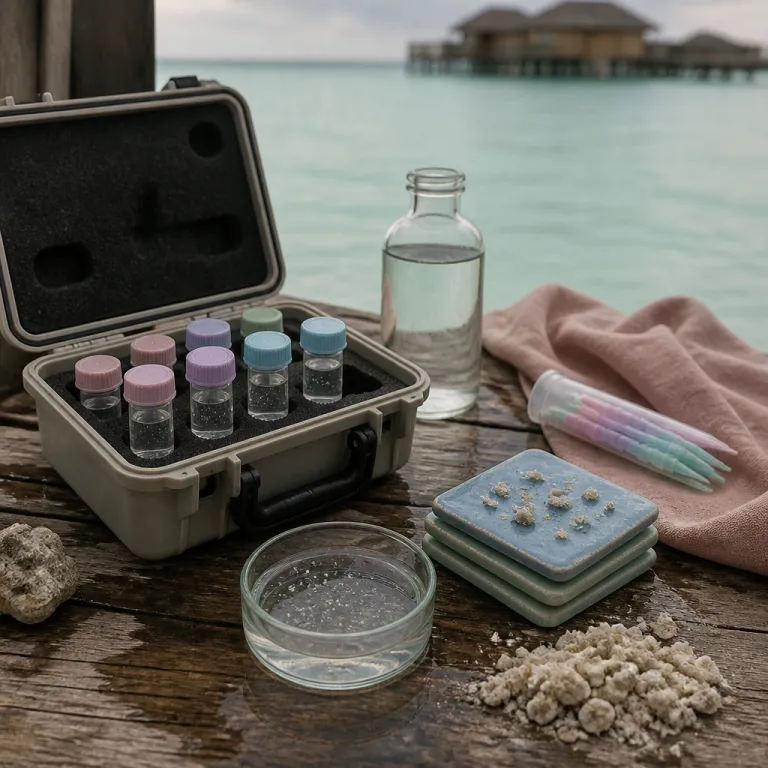
From coral fragments to larvae: why maldives coral reef restoration technology is shifting
For years, luxury resorts in the Maldives equated coral restoration with neat metal frames dotted by transplanted fragments. Those structures still matter for many reefs, yet a new wave of maldives coral reef restoration technology is quietly changing what serious projects look like beneath your villa. If you care about coral reefs as much as sunset cocktails, understanding this shift will shape where you book next.
Traditional coral restoration relies on fragmenting healthy corals, tying or cable tying them to frames, and hoping they grow fast enough to rebuild a damaged reef. This approach can enhance coral cover on small patches, but every fragment is a clone, which limits genetic resilience when climate change pushes the ocean past bleaching thresholds. The method also struggles to scale across the thousands of reef systems that ring the atolls of the Maldives.
ReefSeed enters as a portable aquaculture system that treats coral spawning as the starting point, not an afterthought. Instead of cutting fragments, scientists collect gametes during natural coral spawning events, rear millions of larvae in controlled tanks, then settle juvenile corals onto specially designed seeding devices. This reefseed system aims to seed entire reef slopes with genetically diverse corals that can adapt better to future heat waves.
The Australian Institute of Marine Science, working with the Maldives Marine Research Institute, designed the ReefSeed system to be shipped and operated on remote islands. That portability matters for maldives marine conservation, because many promising restoration efforts happen far from Malé’s laboratories. When you read that a resort supports a ReefSeed based coral project, you are looking at maldives coral reef restoration technology built for scale rather than for a single Instagram friendly coral frame.
Inside the ReefSeed system: portable reef aquaculture for a changing ocean
ReefSeed is, at its core, a compact coral aquaculture lab that fits into standard shipping containers. The system includes automated coral spawning tanks, larval rearing units, and racks that hold hundreds of seeding devices ready to be planted back onto the reef. For a traveler, this means that serious reef restoration can now happen on the same island where you sleep, rather than in a distant institute marine facility.
During a recent Maldives Marine Research Initiative project, the ReefSeed system produced more than three million coral larvae in a single spawning season. Those larvae were settled onto around seven hundred and twenty devices, each carrying clusters of juvenile corals that can help restore degraded coral reefs across nine sites. When you hear that a property supports a ReefSeed project, you are hearing about restoration efforts that operate at a scale far beyond a few symbolic coral planting ceremonies.
The technical advantage lies in how these larvae based coral approaches handle genetic diversity. Because the larvae come from mass coral spawning events, they mix genes from many parent corals, which helps corals grow with more varied traits and potentially greater resilience. Compared with fragment based coral restoration, this larval route can enhance coral adaptation to climate change and support long term reef resilience.
For guests, the most visible part of this maldives coral reef restoration technology is often the seeding devices being lowered from a dhoni over a house reef. A well run programme will invite you to help plant corals by placing these devices on the reef, guided by a marine science team that explains how the system aims to rebuild coral cover. Before you sign up, read guides such as this analysis of how to tell working restoration from lobby decoration, then ask your resort pointed questions about data, monitoring, and long term community based involvement.
Numbers that matter: MMRI, ReefSeed and resort led restoration efforts
The Maldives Marine Research Institute has become the quiet backbone of maldives coral reef restoration technology, translating global science into local reef restoration practice. Working with the Australian Institute of Marine Science and the Commonwealth Scientific and Industrial Research Organisation, MMRI has operated ReefSeed deployments that rear millions of larvae and deploy thousands of juvenile corals. These efforts are not abstract ; they are reshaping specific reefs that sit beneath real villas and real dive sites.
One MMRI led project used the ReefSeed system to rear more than three million larvae and settle over ten thousand juvenile corals across nine reef sites using seven hundred and twenty seeding devices. Those numbers matter because they show how larval based coral restoration can scale beyond a single resort lagoon and into regional reef networks. For a traveler choosing between properties, asking whether a resort collaborates with MMRI on maldives marine projects is a quick way to separate marketing from measurable impact.
Resort programmes still play a vital role, especially where coral planting with fragments has already built substantial coral cover. At St. Regis Vommuli in Dhaalu Atoll, more than three hundred frames now host over sixteen thousand fragments from thirteen coral species, with survival rates above ninety percent after a major bleaching event and the first recorded coral spawning from restoration frames. That spawning milestone shows that well managed fragment based systems can enhance coral reproduction and feed larvae back into surrounding reefs.
Other properties, such as W Maldives with its six thousand fragment programme, are starting to publish hard data on growth, survival, and reef resilience, a trend we analysed in depth in our review of coral restoration numbers that every resort should share. When resorts share these données openly, they invite scrutiny but also build trust with guests who care about the future of coral reefs. As a solo traveler, you can reward that transparency by directing your booking budget toward properties that treat coral restoration as a long term project, not a photo backdrop.
From assisted evolution to community based reefs: what guests should look for
Not all maldives coral reef restoration technology is created equal, and not every shiny coral nursery signals serious science. Some projects now explore assisted evolution, where researchers selectively breed corals that survive heat stress to enhance coral resilience in future generations. Others focus on community based gardening, where local divers and fishers plant corals along kilometres of degraded reef to protect fisheries and shorelines.
On Fuvahmulah, a community led project is restoring more than five kilometres of damaged reef, benefiting around ten thousand residents who rely on healthy coral reefs for fisheries and coastal protection. These community based efforts often use a mix of fragment planting and larval seeding, blending traditional coral planting with newer reefseed system tools where funding allows. When you visit such islands, ask how the community shares decision making power and whether restoration efforts are based on local priorities rather than only resort marketing.
Some research programmes, including those linked to AIMS and MMRI, are experimenting with assisted evolution approaches that aim to help corals grow with traits better suited to warmer oceans. While this work remains experimental, it shows how maldives coral reef restoration technology is moving beyond simple frames toward more sophisticated marine science. As a guest, you should look for clear explanations of any assisted evolution project, including risks, safeguards, and how institute marine ethics boards oversee the work.
When evaluating a resort, ask whether its coral reef projects support nearby community reefs or only the house reef beneath its overwater villas. A property that funds training for local guides, supports Fuvahmulah style gardening, and collaborates with MMRI on data collection is investing in regional reef resilience, not just its own lagoon. That kind of integrated approach signals a resort where your stay contributes to the future of maldives coral ecosystems in a meaningful way.
Paying for reef repair: guest adoption, G20 grants and where your booking fits
Behind every coral restoration project in the Maldives sits a funding puzzle that blends public grants, resort budgets, and guest contributions. The ReefSeed deployments operated by MMRI, for example, received around one and a half million US dollars from the G20 Coral Research and Development Accelerator Programme spread over several years. That level of support allows scientists to run a portable system at multiple sites, monitor coral growth, and refine techniques that could be exported to other global reef hotspots.
Luxury resorts typically layer guest adoption schemes on top of such grants, inviting you to sponsor a coral frame, a seeding device, or a section of reef. The best programmes provide GPS coordinates, regular photo updates, and data on coral cover and survival, turning your adoption into a transparent micro investment in reef restoration. When a resort links those guest funds to a formal MMRI or AIMS project, your contribution helps scale maldives coral reef restoration technology rather than duplicating scattered efforts.
As you compare properties on mymaldivesstay.com, pay attention to how clearly each resort explains its reef restoration finances. Some hotels quietly underwrite serious marine science, while others rely heavily on guest donations without publishing results or collaborating with institute marine partners. Our planning guide to a refined stay near Malé shows how even transit hotels can plug into maldives marine initiatives when they choose the right partners.
When you book, ask whether a portion of your nightly rate supports coral restoration, or whether contributions are entirely optional add ons. A resort that bakes reef funding into its core business model is signalling that coral reefs are infrastructure, not charity. As maldives coral reef restoration technology such as the reefseed system matures, expect more properties to share detailed résultats on coral growth, resilience, and long term reef health as part of their standard guest information.
How to choose a resort that treats coral as seriously as you do
For a solo traveler, choosing a Maldivian resort now means choosing a position on the future of coral reefs. The good news is that maldives coral reef restoration technology has matured enough that you can evaluate properties using concrete questions rather than vague eco labels. A little preparation before you book can align your stay with the reefs and communities you care about.
Start by asking whether the resort partners with MMRI, AIMS, CSIRO, or another recognised institute marine organisation on its reef restoration work. Then look for evidence of both fragment based coral planting and larval based projects such as ReefSeed, because each approach plays a different role in rebuilding coral cover and resilience. Properties that share monitoring données, publish survival rates, and explain how their system aims to support surrounding reefs tend to be more credible than those offering only adoption certificates.
On arrival, visit the marine science centre before the spa, and ask to see both the house reef and any off island project sites. A serious programme will show you active coral spawning tanks during the right season, seeding devices ready for deployment, and long term monitoring plots where staff track how corals grow over time. If staff can explain how climate change shapes their restoration efforts and how community based projects fit into the wider maldives marine landscape, you are in the right place.
Finally, pay attention to how the resort talks about the ocean in everyday operations, from reef safe sunscreen policies to respectful dive briefings. A property that treats coral reefs as living systems rather than scenery is more likely to invest in technologies such as the reefseed system and assisted evolution research. Your booking, in that context, becomes part of a global project to enhance coral resilience, not just a week in an overwater villa.
FAQ
What is ReefSeed and why does it matter for Maldivian reefs ?
ReefSeed is a portable coral aquaculture system developed by the Australian Institute of Marine Science with partners, designed to rear millions of coral larvae and settle them onto seeding devices that can be placed on degraded reefs. In the Maldives, the Maldives Marine Research Institute has used ReefSeed to produce more than three million larvae and deploy over ten thousand juvenile corals across multiple sites. This larval based approach increases genetic diversity compared with fragment only methods, which can improve long term reef resilience.
How is larval based coral restoration different from coral planting with fragments ?
Fragment based coral planting cuts pieces from existing corals and attaches them to frames or reef structures, creating clones that can grow quickly but share the same genetic makeup. Larval based restoration, as used in ReefSeed projects, collects gametes during mass coral spawning events, rears larvae in tanks, and settles them onto substrates, producing genetically diverse juvenile corals. That diversity helps coral reefs adapt better to climate change, making larval methods a powerful complement to traditional fragment programmes.
How can I tell if a resort’s coral project is serious or just decoration ?
A serious project will publish data on coral cover, survival rates, and growth, and will often collaborate with organisations such as MMRI, AIMS, or CSIRO. You should see structured monitoring plots, clear explanations of methods, and staff who can discuss climate change, reef resilience, and community based initiatives in detail. Decorative projects usually offer only adoption certificates and pretty frames near the jetty, with little evidence of long term monitoring or external scientific oversight.
Can guests meaningfully contribute to coral restoration during a short stay ?
Guests can contribute by funding well designed projects, joining carefully supervised coral planting or seeding activities, and supporting resorts that integrate restoration into their core operations. The most impactful contributions usually come through programmes linked to formal research, such as ReefSeed deployments run with MMRI, where guest funds help scale proven techniques. Even small actions, such as using reef safe sunscreen and following marine guidelines, help protect the corals you came to see.
Who pays for maldives coral reef restoration technology such as ReefSeed ?
Funding typically combines public grants, such as G20 support for ReefSeed research, with resort investments and guest adoption schemes. Public money often covers core research, equipment, and training, while resorts provide infrastructure and long term site access. Guest contributions then help expand restoration efforts, allowing more seeding devices, more monitoring, and more reefs to benefit from the technology.