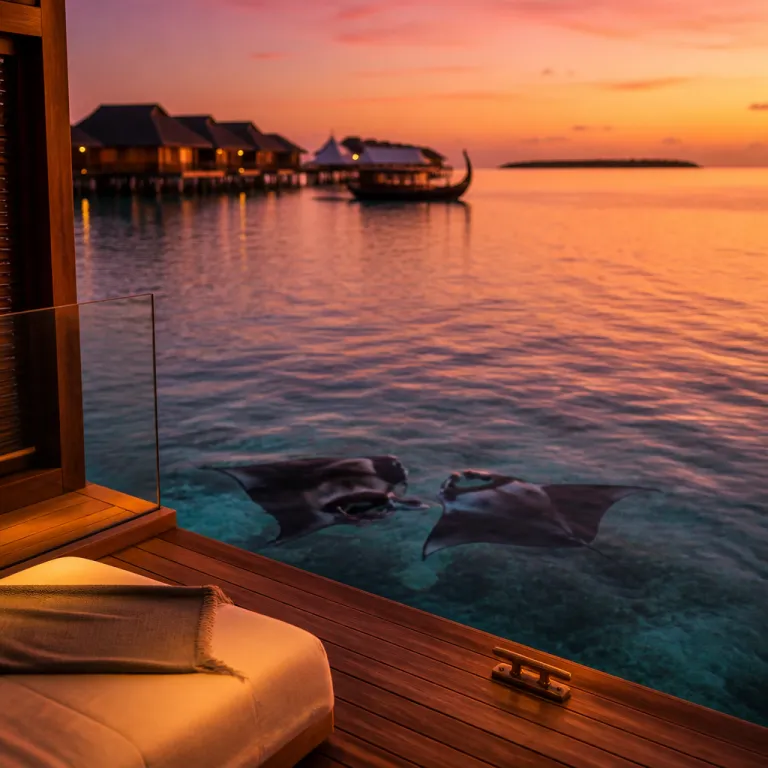
Hanifaru Bay as the crown jewel of Baa Atoll
Hanifaru Bay sits in the heart of Baa Atoll, a compact marine bowl only about 700 metres long and 200 metres wide. During the southwest monsoon, this small Hanifaru basin in the Maldives concentrates plankton so intensely that it becomes one of the best places on the planet to see manta rays and whale sharks in a single protected area. For travellers booking luxury resorts nearby, understanding how this bay works will shape every decision you make about timing, budget, and style of stay.
The atoll itself is part of a UNESCO biosphere reserve, and Hanifaru Bay is a strictly marine protected zone where diving is prohibited to safeguard the reef and the gentle giants that feed here. Local regulations limit daily visitor numbers, require licensed guides, and allow only snorkelling, which means you will swim side by side with mantas at the surface while the rays glide in slow loops beneath you. This is not a casual beach stop; it is a carefully managed encounter with reef manta populations that gather in numbers rarely seen elsewhere in the Maldives.
Context matters when you compare this bay with other islands and reefs in Baa Atoll or beyond. Many resorts in the Maldives promote manta encounters, but only a handful sit close enough to Hanifaru to offer short boat rides during peak plankton tides, when manta numbers can reach more than 100 individuals in a single session. As one Manta Trust researcher notes, “On the busiest days, Hanifaru becomes a living whirlpool of mantas, all feeding shoulder to shoulder in a space no bigger than a football field.” If your goal is to see both mantas and whale sharks in one trip, prioritise Baa Atoll over other atolls, because the unique shape of the bay funnels plankton into a natural cleaning station and feeding arena that attracts these filter feeders from kilometres around.
Key figures in this section draw on data reported by Maldives Magazine and local marine conservation organisations, including the Manta Trust and the Baa Atoll UNESCO Biosphere Reserve office.
Choosing the right luxury resort near Hanifaru Bay
For travellers focused on Hanifaru Bay, the choice of resort in Baa Atoll is not just about private pools and overwater villas. Proximity to the bay, quality of the in-house marine biologist team, and access to responsible operators will determine whether you experience a quiet snorkel with a few manta rays or a life-changing immersion with dozens of gentle giants. When comparing Maldives resorts online, always check how long the boat ride to the bay takes, how often they schedule trips during the season, and whether they coordinate with Manta Trust or similar organisations.
Two of the best-known luxury options close to Hanifaru Bay are The Nautilus Maldives and Amilla Maldives, both positioned in Baa Atoll with strong marine programmes. Guests at The Nautilus Maldives often praise the flexible, private approach to arranging bay excursions, while Amilla Maldives is recognised for its collaboration with marine protected area initiatives and its in-house marine biology hub. One guest described surfacing after a snorkel and saying, “I stopped counting at fifty mantas; they were everywhere I looked, gliding past like slow-motion birds.” When you evaluate these resorts against others in the Maldives, look beyond room photos and consider how each resort will support your access to the bay, the reef, and the wider biosphere reserve.
High-end travellers often want more than a single manta ray snorkel, and the best resorts understand this by curating multi-day marine itineraries. A typical three-night sample might include an afternoon briefing with the resident biologist, a sunrise Hanifaru Bay excursion on day two, a reef manta snorkel at a nearby cleaning station on day three, and a sunset cruise looking for whale sharks or dolphins. To deepen your planning around hidden marine experiences and refined stays, explore this dedicated guide to hidden gems in luxury and premium hotel booking experiences in the Maldives, then match those ideas with the specific strengths of each resort.
Seasonality, plankton, and timing your manta encounters
The magic of Hanifaru depends entirely on plankton, currents, and the southwest monsoon that sweeps across the Maldives from June to November. During this period, the shape of the bay and surrounding reef acts like a funnel, trapping dense clouds of plankton that draw in manta rays and whale sharks from across Baa Atoll. If you want the highest chance of seeing large numbers of mantas, plan your resort stay between July and October, when operators report the most consistent gatherings.
Luxury travellers sometimes underestimate how strongly nature dictates the experience in this marine protected area. Even at the best resorts, there will be days when currents shift, plankton disperses, and only a few mantas or a single whale shark appears in the bay. This is why seasoned Maldives specialists recommend booking at least five to seven nights on an island near Hanifaru Bay, giving you multiple opportunities to join snorkel trips when conditions align and the gentle giants arrive in force.
Because diving is not allowed inside the bay, your interaction with manta rays and whale sharks will always be at the surface, drifting above the reef while guides manage group spacing. Many guests choose to complement these surface encounters with a separate dive on outer reef sites in Baa Atoll, where sharks, turtles, and reef manta populations can be seen in deeper water. To understand how such excursions contrast with more local, non-luxury experiences elsewhere in the Maldives, read about a day on Maafushi without a villa butler, then decide how much of your itinerary you will dedicate to pure marine life versus cultural immersion.
Seasonal timing and aggregation patterns referenced here are based on observations shared by local marine conservation groups, long-term resort monitoring in Baa Atoll, and survey data used by the Hanifaru Bay management authorities.
What to expect on a Hanifaru Bay excursion from a luxury resort
On the day of your Hanifaru Bay trip, resort staff will usually brief you in the dive centre or marine biology hub before departure. They explain why diving is prohibited in Hanifaru Bay, how the marine protected status works, and what role the Maldivian government plays in regulating visitor numbers. You will also learn about entry and exit procedures, how to swim safely with mantas without blocking their feeding paths, and why touching manta rays, whale sharks, or any other marine life is strictly forbidden.
Most high-end resorts in the Maldives operate comfortable speedboats with shaded seating, cold towels, and refreshments for the short ride across Baa Atoll to the bay. On arrival, guides assess current, wind, and plankton visibility, then coordinate with other licensed operators to avoid overcrowding in the small bay. Once you slip into the water from the boat, you may find yourself surrounded by dozens of mantas, all circling in tight feeding chains that look almost choreographed above the reef.
Because this is a protected area, time inside the bay is usually limited, and your guide will manage rotations so that every swimmer has a chance to see both manta rays and, with luck, a passing whale shark. Some days, a single manta ray will glide close enough that you can see the unique spot pattern on its belly, while on exceptional days more than 100 individuals may swirl around you in a living vortex. After the snorkel, many resorts offer debrief sessions with their marine biologist, who will log sightings, explain how Manta Trust uses photo identification to track individual reef mantas, and answer questions about sharks, turtles, and other species seen along the reef edge.
Hidden gem experiences around Hanifaru for luxury travellers
While Hanifaru Bay is the headline act, the surrounding islands and reefs of Baa Atoll hide quieter experiences that suit guests seeking privacy and depth. Many luxury resorts arrange private sandbank picnics on tiny spits of beach, where you can snorkel over coral heads that attract smaller rays, reef fish, and the occasional juvenile shark. These sandbanks often sit within the wider UNESCO biosphere, so you still benefit from the protections that keep marine life abundant and the reef relatively healthy.
Some of the best hidden gems involve timing your excursions away from the crowds that flock to the bay on peak manta days. Ask your resort whether they can arrange early morning or late afternoon snorkels on nearby cleaning station sites, where reef mantas come to be serviced by cleaner fish while you float quietly above. On days when plankton is low in Hanifaru Bay, these alternative sites in Baa Atoll can still deliver intimate encounters with manta rays and other gentle giants, without the intensity of a full feeding aggregation.
For travellers who value curated itineraries, consider combining your Hanifaru excursions with cultural visits to inhabited islands in the Maldives, sunset cruises focused on spotting dolphins and sharks, or guided stargazing sessions that explain traditional Maldivian navigation. Many resorts will weave these elements into a personalised schedule that balances marine adventure with rest, spa time, and fine dining. To broaden your view of what a refined island escape can include beyond mantas and whale sharks, consult this guide to essential things to do in the Maldives for a refined island escape, then align those ideas with the specific strengths of your chosen resort near Baa Atoll.
Responsible luxury: conservation, Manta Trust, and booking ethics
Choosing a luxury resort near Hanifaru Bay carries a responsibility to support conservation, because your presence in this small bay directly affects manta rays, whale sharks, and the broader marine ecosystem. When researching Maldives resorts, prioritise properties that partner with Manta Trust or similar organisations, employ resident marine biologists, and contribute financially to the management of the marine protected area. These resorts usually brief guests thoroughly on how to swim with mantas safely, avoid chasing them, and respect sharks, turtles, and other species that share the reef.
Look for clear information about how each resort complies with Baa Atoll regulations, including limits on the number of guests per trip, adherence to snorkelling-only rules, and respect for the no-dive policy inside Hanifaru Bay. Resorts that publish their conservation commitments, share data with researchers, and educate guests about the UNESCO biosphere status of Baa Atoll tend to offer more meaningful experiences with the gentle giants. As one park manager explains, “Our rules are not about limiting fun; they are about giving mantas the space they need so visitors can keep watching them for decades to come.”
From a booking perspective, responsible luxury means planning early, travelling during the appropriate plankton season, and accepting that nature sets the schedule, not the resort. It also means being willing to pay slightly higher rates at properties that invest in reef restoration, waste reduction, and community engagement on nearby islands. As one official guidance explains, “Why is diving prohibited in Hanifaru Bay? To protect the fragile ecosystem and prevent disturbance to marine life.”
Practical booking tips for a Hanifaru focused Maldives stay
When your primary goal is Hanifaru Bay, start planning at least six to nine months ahead, especially for peak manta season in Baa Atoll. Focus your search on resorts within reasonable speedboat distance of the bay, then compare how often each property runs excursions, what they charge per person, and whether trips are shared or private. You will also want to check cancellation policies for marine excursions, because weather and plankton conditions can change quickly in the Maldives.
Room choice matters less than location and access, but many travellers still prefer overwater villas for the classic Maldives experience, with direct ladder access to the reef and rays sometimes gliding beneath their decks. If budget allows, consider splitting your stay between two resorts in Baa Atoll, one closer to Hanifaru Bay for manta and whale shark encounters, and another on a quieter island focused on spa, wellness, and beach time. As a rough guide, some islands sit 15–20 minutes by speedboat from the bay, while others may require 40–50 minutes each way, which can influence how often you realistically join excursions.
Before confirming any booking, ask the resort specific questions about their relationship with the marine protected area, their work with Manta Trust, and their policies on group size in the bay. Clarify whether they provide snorkelling equipment, whether a marine biologist accompanies trips, and how they manage safety around sharks, currents, and boat traffic. With clear answers in hand, you will be able to choose the best resort for your Hanifaru-focused journey, confident that your stay supports both your own experience and the long-term health of this remarkable bay.
Key figures about Hanifaru Bay and Baa Atoll
- Hanifaru Bay measures roughly 700 metres in length and 200 metres in width, creating a compact bowl that concentrates plankton and attracts dense aggregations of manta rays and whale sharks during the southwest monsoon season (data reported by Maldives Magazine and supported by local marine surveys and Manta Trust fieldwork).
- Surveys have recorded up to 200 individual manta rays in the bay during peak feeding events, making Hanifaru one of the most significant single sites for reef manta gatherings anywhere in the Maldives (figure referenced by Maldives Magazine, the Baa Atoll UNESCO Biosphere Reserve, and conservation partners such as the Manta Trust).
- The main manta and whale shark season in Baa Atoll runs from June to November, with the highest probability of large aggregations between July and October, when monsoon-driven currents push plankton into the bay (timing confirmed by local marine conservation organisations, official monitoring reports, and long-term resort observations).
- Hanifaru Bay forms part of the Baa Atoll UNESCO biosphere reserve, a designation that supports stricter regulations on visitor numbers, snorkelling-only rules, and the prohibition of diving to protect the fragile reef and associated marine life.
FAQ about Hanifaru Bay luxury stays and manta encounters
Why is diving not allowed in Hanifaru Bay?
Diving is not allowed in Hanifaru Bay because regulators have determined that bubbles, depth changes, and close contact from divers can disturb feeding manta rays, whale sharks, and other marine species. Snorkelling at the surface creates less disruption and allows guides to manage group movements more effectively in the small bay. This snorkel-only rule is a core part of the site’s marine protected status within the Baa Atoll UNESCO biosphere reserve.
How can I visit Hanifaru Bay from a luxury resort?
You can visit Hanifaru Bay only through licensed tour operators, which in practice means booking excursions with your resort’s dive centre or marine biology team. Resorts in Baa Atoll such as The Nautilus Maldives and Amilla Maldives typically run scheduled speedboat trips during the manta season, coordinating with local authorities to respect daily visitor limits. Independent access is not possible, so choosing a resort with strong marine partnerships is essential.
When is the best time to see manta rays in Hanifaru Bay?
The best time to see manta rays in Hanifaru Bay is between July and October, when southwest monsoon currents drive high concentrations of plankton into the bay. Mantas may appear from June to November, but sightings are most frequent and numerous in the middle of this window. Booking your Maldives stay in Baa Atoll during these months significantly increases your chances of encountering large aggregations of manta rays and the occasional whale shark.
Which Maldives resorts are closest to Hanifaru Bay?
Several luxury resorts in Baa Atoll sit within convenient speedboat distance of Hanifaru Bay, including The Nautilus Maldives and Amilla Maldives, both known for strong marine programmes. Other high-end resorts in the atoll also offer access, but transfer times and excursion frequency vary. When comparing options, always ask each property how long the boat ride to the bay takes and how many trips they typically run per week during peak season.
Is Hanifaru Bay suitable for non swimmers or children?
Hanifaru Bay can be suitable for confident snorkellers, including older children, but conditions sometimes involve currents, waves, and crowded water, which may challenge non-swimmers. Many luxury resorts in the Maldives offer flotation devices, shallow lagoon practice sessions, and private guides to support less experienced guests before they enter the bay. Families should discuss comfort levels with the resort’s marine team in advance to decide whether a Hanifaru excursion is appropriate for each traveller.