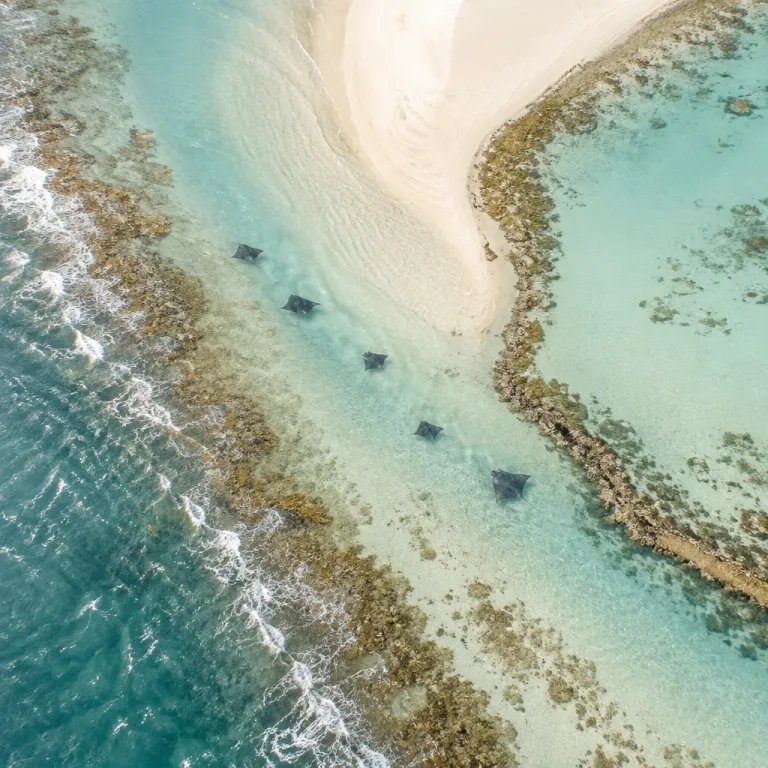
Reading the monsoon: how manta season redraws the Maldivian map
The Maldives manta ray season is not a marketing phrase; it is the quiet engine that decides where plankton, manta rays and the most rewarding luxury stays align. When the southwest monsoon (locally called Hulhangu) blows across the archipelago from roughly May to October, it pushes surface water and dense plankton clouds toward the eastern rims of each atoll, turning some channels into temporary feeding arenas while leaving others almost empty. For a traveler planning high end diving or refined snorkeling encounters, understanding this seasonal choreography is the best way to choose both the right atoll and the right time to visit.
From roughly the first wet month of the southwest monsoon, currents tend to run from west to east, so plankton blooms gather along eastern outer reefs and in open water near deep channels. Reef manta rays (Mobula alfredi), which are the smaller coastal manta species, track this plankton and move across the Maldives like patient nomads, while whale sharks and other sharks patrol the same productive water for different prey. According to long term observations compiled by the Manta Trust, these patterns typically hold until late October or early November, when winds ease, the monsoon pattern flips and the northeast trade winds arrive around December to April, reversing the flow so that the main manta hotspots quietly migrate to the western sides of the same atolls.
This is why a resort that is the best address for manta encounters in one season can feel oddly quiet in another, even though the house reef, the water clarity and the scuba diving guides have not changed. For solo travelers who want manta rays rather than just overwater architecture, the key question is not only which atoll, but which coast of that atoll during a specific month of the year. Think of the Maldives’ plankton driven manta migration as a moving corridor of life, and your hotel choice as a decision about where to stand along that corridor when the rays pass.
Southwest monsoon: Baa Atoll, Hanifaru Bay and the eastern reefs
During the southwest monsoon, Baa Atoll becomes the reference point for manta season in the Maldives, and Hanifaru Bay is its most famous stage. Here, the shape of the bay, the atoll channels and the lunar cycle combine to funnel plankton into a shallow bowl of water, creating short but intense feeding events where dozens of manta rays can loop and barrel roll in tight formation. When conditions align between roughly June and October, it is one of the best natural spectacles in the Indian Ocean, but it is also tightly regulated and often crowded.
Luxury resorts on the eastern side of Baa Atoll tend to have the most efficient access to Hanifaru Bay during this season, with typical boat rides of 15 to 35 minutes, while properties on the western rim may focus more on reef diving with sharks and turtles. If your priority is time in the water with manta rays rather than long boat rides, look for resorts that combine proximity to the bay with strong in house marine biology teams and clear briefings on manta ray behavior. This is also the moment to read a refined wet season guidance for luxury stays, because the same southwest monsoon that brings plankton blooms can also bring choppy open water and short bursts of rain.
Outside Hanifaru Bay, eastern Baa Atoll channels host cleaning stations where manta rays queue above coral bommies while cleaner fish pick parasites from their skin and gills. These cleaning stations are not feeding sites, so the manta behavior is calmer and more predictable, and respectful divers with proper water certification can often enjoy long, almost meditative encounters. During the peak southwest monsoon month, a well chosen resort on the eastern edge of Baa Atoll can offer both the drama of Hanifaru Bay and the quieter intimacy of these cleaning stations, making this side of the atoll the best time choice for manta focused trips.
Northeast monsoon: Ari Atoll, South Ari and the western channels
When the northeast monsoon (known locally as Iruvai) settles over the Maldives, usually from December to April, the manta season shifts, and the western sides of many atolls, especially Ari Atoll and South Ari, begin to shine. Currents now push plankton rich water toward the outer western reefs, and manta rays respond by abandoning some eastern cleaning stations and feeding zones to patrol new sites along the opposite coast. For travelers, this means that the best time to visit a resort in South Ari for manta encounters is often the mirror image of the Baa Atoll calendar.
South Ari is also the most reliable area in the Maldives for year round whale shark encounters, and the interplay between manta rays, whale sharks and smaller reef sharks gives this atoll a particular energy. During the northeast monsoon, plankton blooms can hang in open water along the western reef, drawing both manta and whale shark into the same blue corridors, while scuba diving boats drift quietly above. If you are staying on a refined local island such as Dhigurah, which is a discreet base for South Ari exploration, you can combine manta focused snorkeling with slow paced island life and still reach the main whale shark zones within about 20 to 40 minutes by boat.
Luxury resorts on the western rim of Ari Atoll often market their proximity to whale sharks, but the same geography makes them strong bases for manta season during the December to April window. Look for operators who brief clearly on how to behave around both manta rays and whale sharks, because crowded encounters can quickly become stressful for the animals. A thoughtful guide will position the boat up current, let you slip into the water quietly and allow the manta or shark to approach on its own terms, which is the best way to secure unhurried encounters without chasing.
Reef mantas, oceanic mantas and the etiquette of sharing their space
Not all manta are the same, and the seasonal current patterns in the Maldives shape where each type appears. Reef manta rays are the smaller, more coastal species that frequent lagoons, channels and shallow cleaning stations, while the larger oceanic manta ray (Mobula birostris) tends to roam deeper open water beyond the atoll rims. Most luxury travelers in the Maldives will meet reef mantas, but certain remote channels occasionally host oceanic individuals, especially where strong currents push nutrient rich water up steep walls.
Cleaning stations are the most reliable places to see manta rays behaving naturally, and they demand a different etiquette from feeding sites such as Hanifaru Bay. At a cleaning station, manta approach a specific coral head or rocky outcrop where cleaner wrasse and other fish remove parasites, and any diver who swims directly above the bommie risks blocking the cleaning traffic. The best guides will brief you to stay low, keep a respectful distance and let the manta rays circle back repeatedly, which often leads to longer encounters than chasing them through the water.
Feeding aggregations, whether in Baa Atoll or along the western edge of South Ari, can look chaotic, with manta, whale sharks and even smaller sharks weaving through the same plankton clouds. Here, the priority is to avoid touching any animal, to keep your fins away from the surface where manta feed and to follow the instructions of your guide, who is reading both the current and the behavior of the rays. Responsible operators in the Maldives increasingly work with organizations such as the Manta Trust and local whale shark research programs, and choosing such a partner is one of the best ways to ensure that your manta season encounters support, rather than stress, these long lived animals.
Choosing your resort by coast, month and level of immersion
For a solo explorer using a luxury booking platform, the most strategic way to approach manta season in the Maldives is to start with your preferred month, then match it to the right atoll and coast. If you are traveling during the heart of the southwest monsoon wet season, an eastern facing resort in Baa Atoll or another northern atoll will usually offer the best mix of feeding encounters and nearby cleaning stations. For a trip in the clearer December to April window, a western facing property in Ari Atoll or South Ari often becomes the better choice, especially if you want to combine manta rays with whale sharks.
Once you have aligned month and coast, look closely at how each resort handles diving and snorkeling logistics, because this will shape your actual time in the water. Some high end properties outsource scuba diving to third party centers, while others maintain in house teams with strong water certification standards, dedicated manta season briefings and flexible schedules that follow the tides and currents. If you value independence, consider resorts that offer small group boats or private guides; for example, a property with two or three daily departures to Hanifaru Bay or the South Ari whale shark zone, each lasting two to three hours door to door, can dramatically increase your chances of being in the right place when plankton and manta align.
Accommodation style also matters less than location and marine ethos, but it still shapes the feel of your trip, especially if you are balancing manta focused days with quiet evenings. A curated selection of overwater resorts can be a useful starting point, yet the real luxury lies in a house reef where the resident marine biologist is as central to the experience as the sommelier. Choose properties that talk about cleaning stations, current patterns and year round shark life as confidently as they describe spa menus, and you will know you are in the right place for a manta season that feels both informed and deeply respectful.
FAQ
What is the best time to see manta rays in the Maldives ?
The best time to see manta rays in the Maldives depends on which atoll and which coast you choose, because the southwest and northeast monsoons move plankton and therefore manta hotspots across the country. During the southwest monsoon wet season, roughly from May or June toward October, eastern atoll rims such as Baa Atoll tend to host more intense feeding encounters. In the clearer December to April period, manta rays are more often found along western coasts, especially in Ari Atoll and South Ari, where they sometimes share plankton blooms with whale sharks.
Where should I stay for manta season during the southwest monsoon ?
For the southwest monsoon, an eastern facing resort in Baa Atoll is usually the strongest choice, because it offers relatively quick access to Hanifaru Bay and several reliable cleaning stations. Other eastern rims in the central Maldives can also be productive, but Baa Atoll remains the reference point for dense feeding aggregations during this wet season. When comparing properties, prioritize those with experienced diving teams, clear manta behavior briefings and flexible boat schedules that can adapt to changing currents and plankton conditions.
Do I need scuba diving experience to see manta rays in the Maldives ?
You do not need scuba diving experience to see manta rays in the Maldives, because many of the most famous encounters, including Hanifaru Bay, are snorkel only. That said, having basic water confidence and, ideally, some form of water certification or guided training will make you more relaxed in currents and better able to follow your guide’s instructions. If you are a certified diver, you can also access deeper cleaning stations and open water channels where manta rays, sharks and sometimes whale sharks share the same blue space.
How does November affect manta ray encounters and hotel choice ?
November is a transitional month in the Maldives manta calendar, when winds and currents can shift between southwest and northeast patterns. This means manta rays may still gather on eastern atoll rims early in the month, then gradually move toward western coasts as the new monsoon establishes itself. For hotel bookings, it is wise to speak directly with dive centers or marine biologists about recent manta sightings, and to choose properties that can reach both sides of the atoll within a reasonable boat time.
Are manta ray and whale shark encounters ethical in the Maldives ?
Manta ray and whale shark encounters in the Maldives can be ethical when operators follow strict guidelines on distance, group size and behavior in the water. Look for resorts and dive centers that collaborate with conservation organizations, limit the number of swimmers around each animal and brief guests not to touch, chase or block the path of manta rays, sharks or whale sharks. Choosing such responsible partners is one of the best ways to ensure that your manta season trip supports long term marine health rather than simply consuming it.