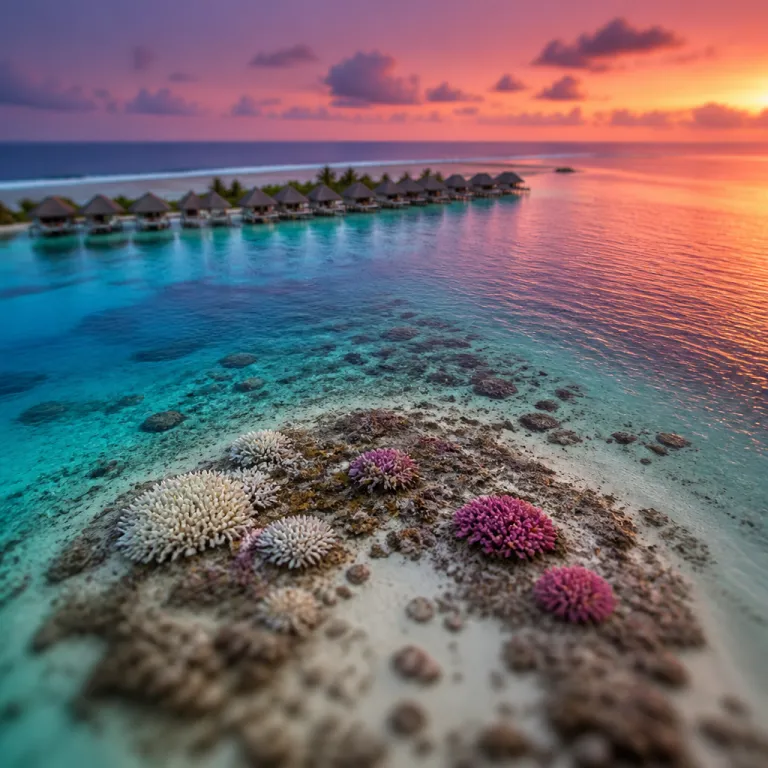
UN heat-stress scenarios and what they mean for your next stay
The Maldives coral reef climate impact is no longer abstract for high-end travelers. United Nations Economic and Social Commission for Asia and the Pacific (UNESCAP) heat-stress projections now frame how every coral reef in the Republic of Maldives may fare across this century, and they should inform how you choose your next overwater villa. Under the moderate SSP2-4.5 pathway, the report “The Heat Is On: Climate Change and Heatwaves in Asia and the Pacific” indicates that reefs across this Indian Ocean nation still face frequent bleaching events by around 2040, while under the high-emissions SSP5-8.5 scenario up to roughly 90–93 percent of Maldivian coral systems could endure very high thermal stress by 2080, based on regional climate model ensembles and associated uncertainty ranges.
For guests, that means climate pressure on Maldivian coral ecosystems will shape whether the reef you snorkel this season remains vibrant or shifts toward a ghostly coral-bleaching landscape within your lifetime. Historical data already shows the scale of change: the 1998 global warming spike killed an estimated 60–90 percent of shallow corals in some atolls, while the 2016 marine heatwave affected around 60–70 percent of shallow reefs and up to three-quarters of deeper reef ecosystems across the country, according to surveys by the Maldives Marine Research Institute (MMRI) and the International Union for Conservation of Nature (IUCN) summarised in national reef-status reports. As MMRI in Malé and IUCN refine national coral monitoring with underwater surveys, satellite tools and AI-enhanced data analysis, the focus is moving from documenting loss to planning adaptation and long-term sustainable development for tourism, even though scientists stress that recovery trajectories vary widely between atolls.
Heat stress is only one layer of the wider Maldives reef climate challenge, because rising sea-surface temperatures interact with ocean acidification, sea-level rise and local pollution from poorly managed development. Under both emissions scenarios, UN and national data show that southern and central atolls such as Seenu, Gnaviyani, Gaafu Dhaalu, Meemu, Vaavu and Laamu will likely experience earlier and more intense bleaching events due to their exposure to warm Indian Ocean currents. Elevated sea temperatures cause corals to expel symbiotic algae, and damaged reefs reduce marine biodiversity, impacting snorkeling and diving experiences, so the question for luxury tourism is no longer whether climate change will alter house reefs but how quickly each resort responds with credible, independently verifiable action while acknowledging that projections and impact models still carry methodological limits.
Atoll by atoll: where reefs are most at risk and who is restoring them
Geography now quietly dictates the kind of Maldives coral reef change you will witness from your villa deck. Southern and central atolls sit closer to equatorial Indian Ocean heat pools, so their coral communities face more frequent thermal spikes, while some northern atolls enjoy slightly cooler currents and marginally lower bleaching risk in the near term. This does not mean any reef in the Republic of Maldives is safe from global climate change, but it does mean your choice of atoll shapes whether you are swimming above stressed corals or relatively resilient reef ecosystems that still retain high live-coral cover, at least for now.
On the ground, or rather in the water, a cluster of resorts is turning climate-impact data on Maldivian reefs into concrete marine action rather than marketing copy. At W Maldives in North Ari, the Reef Stars programme uses metal frames to stabilise broken coral fragments, creating a semi-submerged sculpture garden that doubles as a living laboratory for adaptation to warming sea conditions; early monitoring suggests some fragments survive and grow, but researchers caution that such projects cannot fully offset large-scale bleaching. In South Ari, the IUCN Tech4Nature collaboration links resort operators with national coral scientists to test sensors, remote cameras and AI tools that track bleaching events in near real time, while in Baa Atoll, Milaidhoo’s community coral-planting work brings guests, staff and local islanders together to rebuild damaged reef patches and support nearby fisheries that depend on healthy reef habitat, with success measured over years rather than weeks.
For a solo traveler who wants their stay to fund more than a sunset cocktail, these projects offer a way to align personal climate values with high-end tourism. Before booking, read how each property talks about the climate risks facing Maldivian coral reefs and look for specific references to coral-restoration partners, monitoring methods and long-term funding, not vague pledges about the ocean. This article is editorial and non-promotional, and any resort or project mentioned is included as an illustrative example rather than a paid recommendation. For a deeper dive into how large-scale larvae work is reshaping reef adaptation across the country, our feature on reefseed and portable coral labs explains how three million larvae and mobile science teams are quietly rewriting what resilient infrastructure for marine ecosystems can look like in a luxury destination, while still being evaluated by independent marine biologists.
How to book luxury stays that genuinely support reefs, not just the brochure
Climate-driven stress on Maldives coral reefs now sits at the centre of any honest conversation about five-star travel in this low-lying country. Every seaplane hop and diesel-powered supply dhoni contributes to global emissions, yet tourism also funds marine research, national coral surveys and local NGOs that would otherwise struggle to operate. The paradox is clear: travel drives pressure on coral reefs, but it also finances climate-adaptation trials, reef-restoration pilots and sustainable development experiments that may keep key ecosystems alive, even if not every initiative delivers the same ecological gains.
When you scan resort websites, separate genuine coral-reef stewardship from greenwashing by looking for transparent data, named partners and clear timelines. Properties that reference UN or MMRI heat-stress findings, publish maps of their house-reef health and invite guests to join coral-bleaching monitoring dives are usually taking real action, while those that only mention “turquoise water” and “vibrant marine life” may be trading on a past reality. Our guide to coral nurseries on the property breaks down how to tell a functioning restoration site from a decorative frame placed for social media, and highlights questions local scientists suggest guests ask about survival rates, maintenance and independent evaluation.
On a practical level, choose resorts that invest in renewable energy, efficient water treatment and low-impact overwater structures, because resilient infrastructure on land reduces pressure on nearby coral habitats and reef ecosystems. Look for properties that cap guest numbers on sensitive reef sites, enforce reef-safe sunscreen rules and support national climate-change policy through local councils or industry groups, not just glossy pledges. For a balanced stay that pairs serious marine conservation with refined island living, consider a property such as Velassaru Maldives in the central Indian Ocean, where the focus on house-reef health, measured development and long-term engagement with marine biologists shows how luxury tourism, climate action and the realities of warming seas can be held in the same frame without pretending sea-level and temperature trajectories are anything but challenging.
What travelers can do, according to reef experts
Behind the scenes of your next check-in, a quiet coalition of scientists and conservationists is working to keep climate change from erasing the very coral ecosystems that draw visitors. The United Nations, the Maldives Marine Research Institute in Malé and the International Union for Conservation of Nature coordinate underwater surveys, satellite monitoring and temperature logging to track how global warming, ocean acidification and local stressors are reshaping coral reefs across the Republic of Maldives. Their shared goals are simple but urgent: protect marine biodiversity, support local economies and enhance climate resilience for both island communities and high-value tourism, while communicating clearly where evidence is strong and where knowledge gaps remain.
For travelers, the guidance from this expert community is refreshingly direct and aligns with a luxury mindset that values intention over volume. They emphasise three core behaviours for guests who care about the future of Maldivian coral reefs and want their stay to support national adaptation rather than accelerate loss. “Check latest travel advisories. Support eco-friendly resorts. Participate in reef-safe activities.” In practice, that means staying informed about bleaching alerts, choosing properties that publish independent reef assessments and following local advice from marine biologists and dive guides when you enter the water.