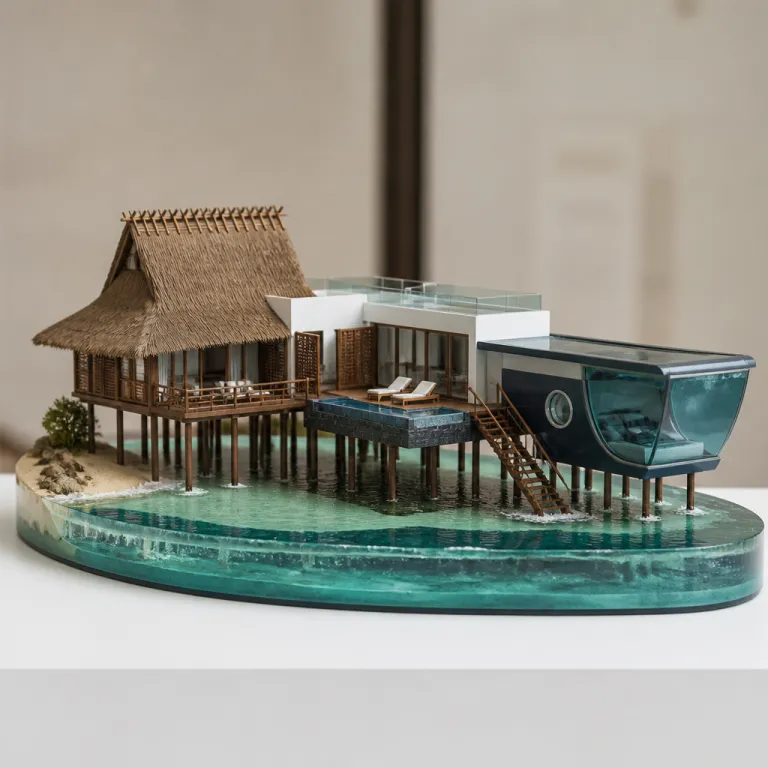
The first wave of Maldivian resort architecture: coral stone, thatch and tide
Step off a seaplane photo for a moment and picture the maldives before overwater villas, when the first island resort meant coral stone walls, woven palm roofs and sand underfoot. Early maldivian resort pioneers borrowed directly from village architecture, using limewashed coral blocks, timber posts and open pavilions that bled into the lagoon breeze. This was the quiet start of the maldives resort architecture design history that still shapes how serious travelers read a property today.
On many islands, the first resorts sat just behind the beach crest, respecting wind patterns and shade in a way that now feels like intuitive contemporary architecture. Simple pavilions functioned almost as an informal exhibition of maldivian building craft, with hand carved details and low slung roofs that echoed fishermen’s houses. When you look at archival images of early island resorts, you see the DNA of today’s architectural marvels in those modest, human scaled forms.
Materials were hyper local, long before sustainability became a tourism tagline in the maldives or elsewhere. Builders used coconut timber, thatch and coral stone because shipping concrete across scattered islands was expensive and slow, not because anyone was chasing eco awards. Yet this vernacular resort architecture kept structures low, porous and naturally ventilated, which now reads as a sophisticated response to climate and marine conditions.
For couples booking a hotel today, understanding this history maldives chapter helps decode why some properties still feel grounded while others float in abstraction. A maldivian resort that retains coral inspired textures, shaded courtyards and sand floored lounges is not being nostalgic ; it is referencing a heritage site level of local knowledge. When you see an island resort where the main restaurant sits parallel to the shoreline, with deep eaves and open sides, you are looking at a direct descendant of those first maldivian architectural experiments.
Names matter in this story, because individual designers helped translate village logic into resort comfort. Early maldivian architects such as mauroof jameel and other local talents worked to adapt traditional forms to international expectations of privacy, comfort and luxury. Their work, often done without global fanfare or formal awards, underpins the relaxed elegance that still defines many island resorts across the atolls.
Today, when you walk into a low, thatched lobby on nika island or another heritage leaning property, you are stepping into living design history. These hotels show how architecture can frame the lagoon without dominating it, using filtered light, cross ventilation and carefully placed courtyards. For travelers who care about sense of place, this first generation of resort architecture in the maldives remains a powerful reference point when choosing between seemingly similar luxury resorts.
The overwater revolution and the new language of island luxury
The second major chapter in maldives resort architecture design history arrived when the first overwater villas marched out across the lagoon. Suddenly, the island itself was no longer the only stage ; the shallow marine shelf became prime real estate, and architecture followed the reef line. This shift rewrote the visual identity of maldivian resort design and turned the country into a global shorthand for stilted luxury resorts above turquoise water.
Overwater structures demanded a different architectural mindset, balancing romance with engineering reality. Timber piles had to respect currents, coral heads and marine habitats, while decks and roofs framed uninterrupted horizons for guests. For couples, the promise of a private island experience expanded from beach villas to entire strings of villas that felt like floating suites, each hotel competing to refine the design language of privacy and spectacle.
As more resorts adopted this typology, overwater villas became both an exhibition of ambition and a test of restraint. Some island resorts kept the forms low and simple, using thatch and timber to echo earlier maldivian architecture, while others introduced sharper contemporary architecture with flat roofs and glass balustrades. The best examples treat the lagoon as a fragile heritage site, spacing structures to maintain water flow and marine life rather than chasing maximum key counts.
For travelers browsing luxury resort options, it is easy to assume that all overwater villas are interchangeable. Look closer at the resort architecture, and you will see crucial differences in how walkways curve, how roofs step down toward the sea, and how privacy is handled between neighboring decks. These details signal whether a maldivian resort is designed as a thoughtful retreat or a simple overwater exhibition for social media.
Architects such as marcio kogan and other international names later refined this language, bringing a more sculptural approach to decks, pools and shading devices. Their work often appears in properties that collect design awards, but the real measure for guests is how comfortably these villas perform in equatorial sun and salt. When a hotel invests in deep overhangs, operable shutters and shaded plunge pools, you feel the difference during long afternoons when the lagoon glare is at its strongest.
If you want to read these signals before you book, study aerial photos and masterplans as carefully as room categories. Our guide to architectural marvels in Maldivian resort design explains how overwater layouts reveal a resort’s priorities, from privacy to reef protection. In practice, a shorter jetty with fewer villas often means a quieter experience and healthier marine life beneath your deck, which matters more than the number of Instagram angles available.
The brand era: global studios meet maldivian heritage
As the maldives matured as a tourism destination, international hotel flags arrived with their own design playbooks. Global brands brought in large architecture and design studios, layering their signature aesthetics onto small islands that already had strong maldivian identities. This period in maldives resort architecture design history is defined by tension between imported luxury codes and local heritage.
On some islands, the result was a polished but placeless resort, where marble lobbies and generic pool decks could have been built in any tropical destination. Yet other projects used the resources of major brands to commission serious architectural marvels, collaborating with studios that respected climate, culture and marine context. For discerning travelers, the difference between these two approaches is immediately visible in how a hotel sits on its island.
Take the fari islands development as a case study in this brand era. Here, patina maldives by Studio MK27, led by marcio kogan, presents a low slung composition of pavilions that blur interior and exterior, using warm timber, soft geometry and carefully framed views. The resort architecture feels like contemporary architecture tuned to the rhythm of the maldives fari lagoon, rather than a generic luxury resort transplanted onto a private island.
Within the same fari islands constellation, other island resorts share a social hub that concentrates restaurants, galleries and a marina. This shared exhibition like space allows each hotel to keep its own architectural identity while benefiting from a central village that feels almost like a floating heritage site of modern maldivian lifestyle. For couples, this means you can stay in one resort yet sample the design, cuisine and marine experiences of several, without losing the intimacy of your chosen island resort.
Local voices remained crucial during this era, with maldivian architects such as mauroof jameel and other designers advocating for climate responsive forms and cultural references. When a studio collaborates with a maldivian team, you often see subtler gestures in the architecture, from courtyard mosques to shaded haruge style pavilions that echo traditional gathering spaces. These touches anchor even the most polished luxury resorts back into the history maldives narrative.
If you want to evaluate a branded property before committing, pay attention to how its design language is described in serious reviews rather than marketing copy. Our piece on reading a resort’s design language before you book breaks down the cues that separate barefoot minimalism from imported opulence. In practice, a hotel that references maldivian heritage in its architecture, rather than only in its spa menu, is more likely to age gracefully and hold its value as a long term luxury resort investment.
Underwater suites, marine engineering and the price of spectacle
The latest headline grabbing chapter in maldives resort architecture design history dives below the waterline. Underwater restaurants, wine cellars and even suites have turned the lagoon into a theatrical stage, where thick structural glass replaces thatch as the primary storytelling device. These spaces are pure exhibition, designed to frame marine life as moving art while guests dine or sleep beneath the surface.
From an architectural and engineering perspective, these underwater rooms are complex, heavy structures that must be carefully placed on the seabed. They require precise calculations for pressure, buoyancy and long term maintenance in corrosive marine conditions, which is why only a handful of island resorts have built them. For travelers, the cost of this engineering translates directly into nightly rates that sit at the very top of the luxury spectrum.
When you book an underwater suite or restaurant in the maldives, you are paying for more than novelty. You are funding a piece of marine infrastructure that had to be transported, submerged and anchored without damaging surrounding coral, then monitored over time as part of the resort’s broader marine program. The best maldivian resort operators treat these structures almost like a private island heritage site, with strict rules on lighting, noise and guest behavior to protect fish and invertebrates.
Not every underwater project achieves this balance, and this is where critical reading becomes essential for design literate travelers. Look for hotels that pair underwater architecture with serious marine biology teams, reef restoration projects and transparent reporting on environmental impact. A property that wins international awards for its underwater restaurant but neglects basic reef health is not aligned with the deeper values of contemporary architecture in fragile marine settings.
Some of the most interesting work now happens at the intersection of spectacle and science, where underwater spaces double as research platforms or educational exhibition rooms. These projects treat the lagoon as more than a backdrop, inviting guests to understand currents, coral spawning and fish behavior while they enjoy the theatre of dining below sea level. For couples, this can turn a single meal into a meaningful memory that connects luxury with learning.
When comparing options, remember that an underwater suite is not essential to a world class stay in the maldives. Many island resorts without such structures offer richer marine experiences through strong house reefs, guided snorkeling and low impact resort architecture that keeps light pollution minimal. If you are allocating budget, consider whether a night beneath the waves or several days on a well designed private island with a thriving reef will deliver more lasting value.
Eco conscious design and how to read a resort before you book
The most compelling current chapter in maldives resort architecture design history is not about height or depth, but about restraint. Architects and operators are rethinking how resorts touch their islands, shifting from domination to collaboration with landscape and reef. For travelers, this is where design becomes a practical booking tool rather than a purely aesthetic concern.
Eco conscious resort architecture in the maldives now favors lighter structures, prefabricated elements and minimal excavation. Many new island resorts use timber or engineered wood on raised platforms, allowing sand and vegetation to move naturally beneath buildings. This approach reduces heat gain, protects root systems and makes it easier to adapt to changing shorelines over time.
Properties such as patina maldives at the maldives fari development show how contemporary architecture can still feel soft and humane. Low pavilions, deep overhangs and carefully calibrated openings create a sense of calm that suits couples seeking privacy rather than spectacle. The design language here is about framing the horizon, catching breeze and filtering light, not about dominating the skyline with tall structures.
Elsewhere, island resorts like velaa private demonstrate how a luxury resort can integrate serious sustainability measures without sacrificing comfort. Thoughtful waste management, renewable energy systems and reef protection programs sit behind the scenes, while guests experience generous villas and refined service. When architecture supports these systems through smart orientation and material choices, the entire property feels more coherent and future ready.
For travelers, the key is learning to read these signals from afar. Study site plans, aerial images and section drawings where available, and pay attention to how many structures sit directly on the beach versus slightly set back. Our guide on how to read a resort’s design language before you book offers a practical checklist that turns architecture into a decision making tool.
Do not overlook smaller properties such as nika island, where maldivian heritage and low impact design quietly shape the guest experience. These hotels may not dominate awards lists, but they often deliver a stronger sense of place through simple, well considered architecture. In a landscape crowded with glossy imagery, the ability to parse design choices becomes one of the most reliable ways to choose a maldivian resort that aligns with your values and your idea of luxury.
Architecture as a booking compass: matching design language to your stay
After five decades of experimentation, maldives resort architecture design history offers travelers a powerful lens for choosing where to stay. Every island resort now broadcasts its personality through built form, from thatched beach villas to sculptural overwater suites and discreet garden pavilions. Reading this language with care can help couples match a hotel’s architecture to the kind of trip they actually want.
If you are drawn to cultural depth and a sense of continuity, look for maldivian resort properties that reference local heritage in more than name. Coral inspired textures, shaded courtyards and haruge style gathering spaces signal a commitment to history maldives rather than a thin thematic layer. These resorts often feel calmer and more grounded, with architecture that encourages barefoot wandering rather than constant performance.
Travelers who prioritize cutting edge design and architectural marvels might gravitate toward properties that collaborate with renowned studios. Names like marcio kogan or a respected maldivian architect such as mauroof jameel in the credits usually indicate a thoughtful approach to climate, light and marine context. These hotels may feature gallery like public spaces, curated art exhibition programs and social hub concepts that encourage guests to linger beyond their villas.
On the other hand, if privacy and seclusion matter most, focus on private island layouts with generous spacing between villas and limited built up areas. Island resorts such as velaa private show how a luxury resort can feel almost residential, with architecture that recedes behind lush planting and carefully framed sea views. Here, design works quietly in the background, supporting long, unhurried days rather than demanding constant attention.
When comparing options on a booking site, treat architecture as a set of practical filters rather than an abstract interest. Overwater heavy resorts may offer dramatic views but less shaded outdoor space, while garden focused properties provide cooler microclimates and more intimate paths. A hotel that invests in thoughtful resort architecture usually invests similarly in service, marine programs and long term stewardship of its island.
Ultimately, the maldives is not a single story but an archipelago of design experiments spread across dozens of islands. From nika island’s heritage leaning villas to patina maldives at the fari islands and the ultra private world of velaa private, each property writes its own chapter in this ongoing narrative. Use that narrative as your compass, and architecture will guide you toward a stay that feels precisely tuned to how you want to experience the ocean, the sky and the quiet edges of luxury.
FAQ
How has Maldivian resort design changed over the decades ?
Resort design in the maldives has evolved from simple thatched beach structures to complex compositions of overwater villas, branded developments and underwater suites. Early maldivian resort architecture relied on coral stone, timber and natural ventilation, while later phases introduced international studios, engineered glass and sophisticated marine infrastructure. Today, many island resorts blend contemporary architecture with eco conscious strategies, using lighter structures and careful siting to protect reefs and shorelines.
What should couples look for in resort architecture when booking ?
Couples should start by matching a resort’s design language to their preferred pace of travel. Overwater focused properties emphasize views and drama, while garden or beach based island resorts often feel more intimate and shaded. It is also wise to look for signs of climate responsive design, such as deep roof overhangs, cross ventilation and minimal hard landscaping directly on the beach.
Are underwater suites in the Maldives worth the premium price ?
Underwater suites and restaurants in the maldives command high rates because they require complex engineering, transport and long term maintenance in harsh marine conditions. For some travelers, a night or meal beneath the surface delivers a once in a lifetime experience that justifies the cost. Others may prefer to allocate that budget to a longer stay at a well designed private island resort with an exceptional house reef and strong marine program.
How can I tell if a resort is genuinely eco conscious or just using green language ?
Look beyond slogans and examine how the resort architecture interacts with the island and lagoon. Genuine eco conscious island resorts typically use lighter construction, elevated walkways, preserved vegetation and thoughtful waste and energy systems. Reviews that mention strong marine biology teams, reef restoration and careful lighting policies are also good indicators of serious environmental commitment.
Does choosing a design led resort affect the overall quality of my stay ?
Choosing a design led maldivian resort often improves comfort, privacy and connection to the landscape, because architecture has been considered as part of the guest journey. Well designed villas manage heat, light and views more effectively, which matters during long days in a tropical climate. In many cases, investment in thoughtful resort architecture correlates with strong service culture, curated experiences and long term care for the island itself.